.png?width=1024&height=1024&name=MyFlight%20Forecast%20app%20icon%202%20(1).png)




U.S. turbulence forecast for today, April 30, 2026, reflects a dynamic but controlled spring...
U.S. Flight Conditions Today | Turbulence & Weather Outlook April 23, 2026 | MyFlight Forecast
Today’s flight conditions across the United States present a mixed but manageable picture for travelers. While no widespread severe aviation disruptions are expected, there are several regional patterns worth noting, especially if you’re flying through major hubs or across weather transition zones. Using insights aligned with platforms like MyFlight Forecast, here’s a full breakdown of what to expect in the skies today.
Northeast and Mid-Atlantic
The Northeast corridor, including key airports in New York, Boston, and Washington, D.C., is starting the day with relatively stable conditions. Expect generally smooth departures during the early morning hours, with only light chop at cruising altitudes. However, as the day progresses, a developing onshore flow may introduce pockets of low-level turbulence, particularly on approach into coastal airports.
Cloud layers will gradually thicken, and while precipitation is expected to remain scattered and light, pilots may need to adjust descent profiles slightly. For passengers, this could translate to minor bumps on arrival, especially into airports like JFK, LaGuardia, and Newark.
Southeast and Florida
The Southeast is one of the more active regions today. Florida, in particular, is dealing with increased atmospheric instability. Afternoon heating combined with moisture-rich air is creating ideal conditions for scattered thunderstorms.
Flights into and out of cities like Miami, Orlando, and Tampa may experience moderate turbulence, especially during climb and descent. Convective activity could also lead to brief delays or reroutes. While most flights will operate normally, passengers should be prepared for some bumps, particularly later in the day.
Midwest and Great Lakes
The Midwest is seeing relatively calm conditions overall, making it one of the smoother regions to fly through today. Cities such as Chicago, Detroit, and Minneapolis are experiencing stable air masses with minimal convective activity.
That said, there is a weak frontal boundary moving through parts of the region, which may introduce light to moderate turbulence at cruising altitudes, particularly between 28,000 and 36,000 feet. These bumps are expected to be brief and not overly disruptive.
For travelers connecting through major hubs like O’Hare, today should be fairly routine with only minor weather-related adjustments.
Southern Plains and Texas
Texas and the surrounding Southern Plains are seeing a more dynamic setup. Warm, unstable air combined with an approaching disturbance is creating pockets of turbulence, especially in the afternoon and evening hours.
Airports in Dallas, Houston, and Austin may experience moderate turbulence during departure and arrival windows. There is also a chance of isolated thunderstorms, which could lead to short-term delays or holding patterns.
At cruising altitude, flights crossing this region may encounter some chop, particularly along jet stream boundaries. Pilots will likely adjust altitudes to find smoother air when possible.
Mountain West and Rockies
The Rockies are living up to their reputation today, with terrain-induced turbulence playing a significant role. Stronger winds aloft interacting with mountainous terrain will create moderate turbulence, especially on the lee side of mountain ranges.
Airports such as Denver, Salt Lake City, and Bozeman may see bumpy approaches and departures. This type of turbulence can feel more pronounced but is very common in this region and well-managed by flight crews.
Passengers flying over the Rockies should keep seatbelts fastened when seated, as intermittent turbulence is likely throughout much of the day.
West Coast
The West Coast is relatively calm, particularly in California. Coastal marine layers are keeping conditions stable, with smooth flying expected for much of the day.
However, Northern California and the Pacific Northwest may see increasing winds later in the afternoon, introducing light turbulence on descent into cities like San Francisco and Seattle. Overall, though, this region offers some of the smoothest flying conditions in the country today.
Jet Stream and High-Altitude Turbulence
One of the key drivers of turbulence today is the positioning of the jet stream across the central United States. Flights traveling eastbound may benefit from stronger tailwinds, potentially shortening flight times, but could also encounter moderate turbulence along the jet core.
Westbound flights, particularly those crossing the Midwest and Plains, may experience longer durations in slightly turbulent air. These conditions are typical and rarely impact safety, but they can affect comfort levels.
What This Means for Travelers
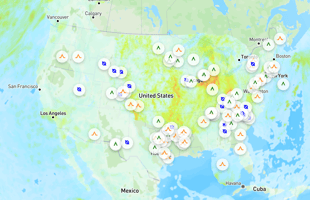
For most travelers across the U.S., today will be a fairly typical flying day with a few pockets of turbulence depending on your route. The most notable areas for potential bumps include:
- Florida and the Southeast during the afternoon
- Texas and the Southern Plains later in the day
- The Rockies throughout the day
If you’re flying today, the best way to stay informed is by checking real-time updates through tools like MyFlight Forecast, which provide live turbulence maps, route-specific forecasts, and pilot-informed data.
Final Outlook
Overall, today’s flight conditions across the United States are manageable, with no major nationwide disruptions expected. While some regions will experience moderate turbulence, particularly where weather systems are more active, most flights will operate smoothly with only minor adjustments.
As always, turbulence is a normal part of flying and modern aircraft are built to handle far more than what you’ll typically experience. Staying informed, keeping your seatbelt fastened, and understanding what to expect can make your journey significantly more comfortable.
For the most accurate and up-to-date insights, especially tailored to your specific route, continue to monitor live conditions through platforms like MyFlight Forecast before and during your trip.