.png?width=1024&height=1024&name=MyFlight%20Forecast%20app%20icon%202%20(1).png)




U.S. turbulence forecast for today, April 30, 2026, reflects a dynamic but controlled spring...
U.S. Turbulence Report for April 28, 2026 | Flight Conditions Today | MyFlight Forecast
U.S. Turbulence Report for April 28, 2026 | National Flight Conditions Outlook
By MyFlight Forecast
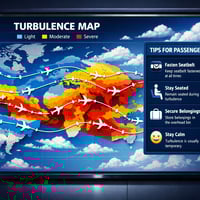
If you’re flying today across the United States, the atmosphere presents a mixed bag of generally manageable conditions, punctuated by pockets of moderate turbulence tied to jet stream energy, springtime convection, and mountain wave activity. Broadly speaking, much of the country is seeing routine ride conditions, but several corridors deserve extra attention, particularly for travelers crossing the Rockies, portions of the Central Plains, and segments of the Northeast where upper level winds remain active.
Forecast guidance and aviation weather products indicate the primary contributors today are areas of stronger winds aloft, isolated convective buildups, and terrain induced mechanical turbulence.
National Overview
For much of the eastern half of the United States, flight conditions are leaning toward light to occasional moderate turbulence, especially during climb and descent where low level mixing can make for a few bumps. At cruise altitudes, much of the Midwest and Southeast should see mostly smooth to lightly choppy conditions, though there may be isolated rougher patches near active weather or stronger jet stream boundaries.
Across the western U.S., the bigger story is mountain wave turbulence. As stronger winds interact with elevated terrain, flights moving through or downwind of the Rockies, Sierra, and Intermountain West may encounter moderate turbulence, particularly at typical cruising levels. These conditions can create those familiar sudden jolts even under otherwise clear skies.
Convective activity also plays a role today. While not widespread enough to create a nationwide disruptive pattern, scattered thunderstorm development in select regions may lead to localized turbulence deviations, particularly during afternoon departures.
Regional Turbulence Outlook
Northeast
Travelers moving through the Northeast corridor, including New York, Boston, Philadelphia and Washington airspace, may encounter occasional light to moderate chop, mainly due to stronger upper level winds and busy routing.
Outlook: Mostly light, pockets of moderate.
Southeast
Conditions across much of the Southeast are favorable. Florida, Georgia, the Carolinas and Gulf Coast routes appear largely smooth outside isolated convective buildups later in the day.
Outlook: Mostly smooth to light turbulence.
Midwest
The Midwest remains one of the steadier regions today, though some routes through Chicago, Minneapolis and surrounding airspace may see occasional chop associated with stronger winds aloft.
Outlook: Light turbulence, isolated moderate pockets.
Central Plains & Texas
This region carries one of today’s higher probabilities for moderate turbulence. Jet stream interactions and spring instability can make portions of the Plains feel more active, particularly for flights moving north south across frontal boundaries.
Outlook: Light to moderate, locally moderate plus near convection.
Rockies & Mountain West
This is where today’s more notable turbulence risks sit.
Mountain wave turbulence may impact routes over Denver, Salt Lake City, Jackson Hole, Aspen and surrounding corridors. Even under blue skies, terrain generated turbulence can produce abrupt movement.
Outlook: Moderate in spots, especially near terrain.
West Coast
California and Pacific Northwest conditions are mixed but largely manageable. Coastal routes may remain relatively smooth, while inland routes crossing higher terrain could see occasional moderate turbulence.
Outlook: Light to moderate, terrain dependent.
What’s Driving Today’s Turbulence
Jet stream shear, mountain wave activity, isolated convection and surface thermal mixing are the primary contributors to today’s bumps.
For many passengers, any turbulence encountered is likely to be the routine “seatbelt sign on for a bit” variety rather than anything prolonged or severe.
Best and Worst Ride Windows Today
Smoothest flying is generally expected:
- Early morning departures
- Evening flights after convective activity weakens
- Coastal routes versus mountain crossings
- East Coast and Southeast routes
Potentially bumpier windows:
- Mid afternoon into early evening
- Rockies crossings
- Central Plains routes
- Flights operating near thunderstorms
Passenger Comfort Outlook
For most travelers today, this looks more like a manageable flying day than a disruptive one. A few moderate bumps may occur, particularly westbound transcontinental routes or mountain crossings, but there is little indicating widespread severe turbulence concerns.
Business Aviation Perspective
For business aviation operators, especially those operating common light and midsize jet cruise altitudes, today may require some tactical altitude changes in western corridors and selective routing around convective buildups.
Operationally, today looks far more routine than restrictive.
MyFlight Forecast Turbulence Summary
Overall U.S. Ride Quality Today:
Good to Fair
Smoothest Regions:
Southeast
Lower Midwest
Much of the East Coast
Most Active Regions:
Rockies
Central Plains
Interior West
Severe Turbulence Risk:
Low, isolated only
Weather Delays, Cancellations, and Backup Options
While today’s turbulence forecast does not point to widespread disruption, spring weather can change quickly, and delays or cancellations can still emerge due to thunderstorms, flow restrictions, or ground stops.
If weather delays or cancellations affect your airline itinerary, travelers can also check one way private flight availability and empty leg opportunities through CharterBlast for potential alternative lift options. For travelers navigating irregular operations, access to available repositioning flights can sometimes provide an additional solution when commercial schedules tighten.
Today’s U.S. turbulence picture leans manageable, with most travelers experiencing light turbulence and occasional moderate pockets rather than widespread rough air. The bumpiest rides are most likely across mountain corridors and select central U.S. routes, while much of the East and Southeast should offer relatively comfortable flying.
As always, turbulence forecasts evolve with changing winds aloft and convective development, but for now this looks more like a minor bumps along the way kind of day than a white knuckle ride day.
If you’re flying today, the best way to stay informed is by checking real-time updates through tools like MyFlight Forecast, which provide live turbulence maps, route-specific forecasts, and pilot-informed data.